
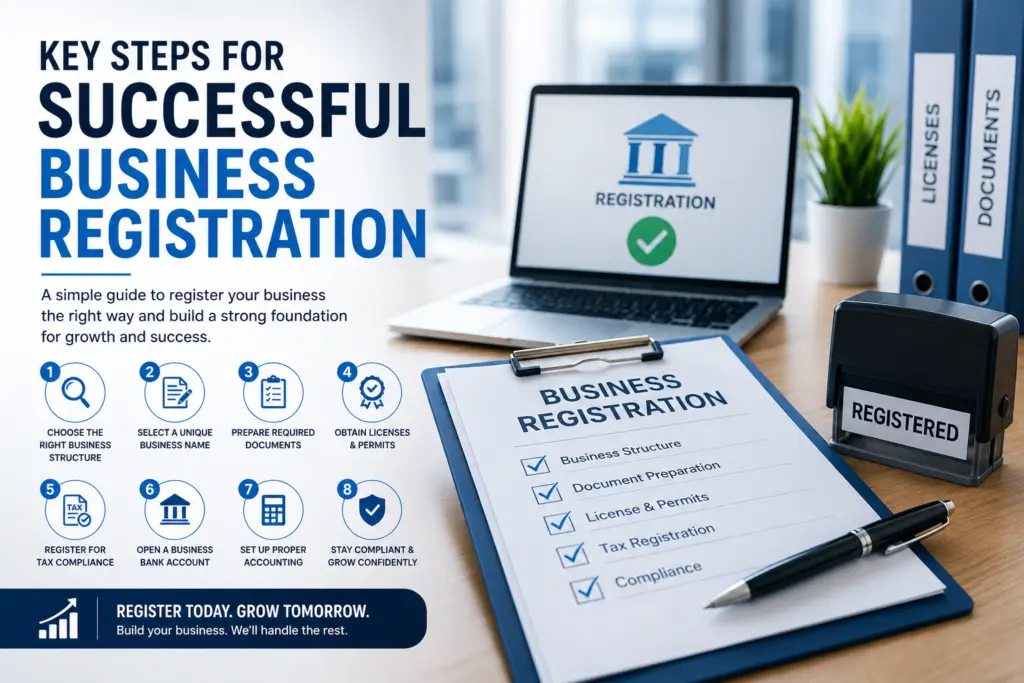
Starting a business is an exciting journey, but proper business registration is one of the most important steps in building a strong and legally compliant company. Registering a business correctly helps establish credibility, ensures legal protection and creates a solid foundation for long-term growth.
Many entrepreneurs focus mainly on launching operations while overlooking essential registration and compliance requirements. A well-planned registration process helps businesses avoid legal complications, improve operational efficiency and gain trust from clients, investors and financial institutions.
Why Business Registration is Important
Business registration gives your company legal recognition and allows you to operate within the framework of government regulations. It also helps businesses access financial services, secure contracts and build a professional reputation in the market.
Proper registration provides several benefits, including:
- Legal protection for business operations
- Improved credibility and trust
- Access to banking and financial services
- Easier tax and compliance management
- Opportunities for business expansion
A registered business also demonstrates professionalism and commitment to long-term growth.
Choose the Right Business Structure
Selecting the appropriate business structure is one of the first and most important decisions. The structure you choose affects taxation, legal liability, ownership and operational flexibility.
Common business structures include:
- Sole Proprietorship
- Partnership Firm
- Limited Liability Partnership (LLP)
- Private Limited Company
- Branch or Foreign Entity Registration
Each structure has different legal and financial implications. Businesses should carefully evaluate their goals, ownership plans and future expansion strategies before making a decision.
Select a Business Name
A professional and unique business name helps create a strong brand identity. Before finalizing a name, businesses should verify its availability and ensure it does not conflict with existing trademarks or registered entities.
A strong business name should be:
- Easy to remember
- Professionally relevant
- Unique and legally available
- Suitable for future brand growth
Trademark registration may also help protect the business identity and branding assets.
Prepare Required Documentation
Business registration requires various legal and operational documents depending on the business structure and jurisdiction.
Commonly required documents may include:
- Identity and address proof of owners
- Business address verification
- Partnership agreements or incorporation documents
- Financial and ownership details
- Regulatory approval forms
Organizing documents in advance helps simplify the registration process and avoid delays.
Obtain Necessary Licenses and Permits
Different industries require specific licenses, approvals and regulatory permits before beginning operations. Businesses should identify all applicable compliance requirements based on their industry and location.
Examples may include:
- Trade licenses
- Tax registrations
- Professional certifications
- Import and export licenses
- Industry-specific operational permits
Operating without proper licenses can result in penalties and legal complications.
Register for Tax Compliance
Tax registration is an essential step for legally operating a business. Businesses may need registrations related to:
- GST or VAT
- Corporate tax
- Payroll and employee-related taxes
- Import and export taxation
Timely tax registration helps businesses maintain compliance and avoid unnecessary penalties.
Open a Business Bank Account
Maintaining separate financial accounts for business operations improves transparency and financial management. A dedicated business bank account also supports professional transactions and simplifies accounting processes.
Business banking helps with:
- Financial tracking and reporting
- Tax filing and audits
- Professional payment handling
- Better cash flow management
Separating personal and business finances is essential for long-term operational stability.
Develop Proper Accounting Systems
Strong financial management is important from the beginning of business operations. Businesses should establish organized accounting systems to track income, expenses and financial performance accurately.
Using professional accounting software or outsourced accounting services can improve financial efficiency and support better decision-making.
Ensure Legal and Regulatory Compliance
Compliance does not end after registration. Businesses must continue to meet regulatory requirements such as annual filings, tax submissions and license renewals.
Regular compliance monitoring helps businesses:
- Avoid penalties and legal risks
- Maintain operational continuity
- Build credibility with clients and investors
- Support future expansion opportunities
Professional consultancy services can help businesses stay updated with changing regulations.
Seek Professional Guidance
Business registration processes can sometimes be complex, especially for startups and expanding companies. Professional consultants can provide valuable support in choosing the right structure, preparing documentation and managing compliance efficiently.
Expert guidance helps businesses save time, reduce errors and ensure smoother registration procedures.
Conclusion
Successful business registration is the foundation of a legally compliant and professionally managed company. By selecting the right structure, maintaining proper documentation and following regulatory requirements, businesses can create a strong platform for sustainable growth.
A properly registered business not only gains legal protection but also builds trust, improves financial management and creates better opportunities for long-term success. Businesses that invest time in proper registration and compliance are better prepared to grow confidently in competitive markets.